
 Tuesday, November 8 at 7PM
A slide lecture by Mark Podwal on how succeeding generations have recreated the golem legend to suit the times. The lecture will touch on the first mention of golems in Biblical and Talmudic sources, the origins of Prague’s golem legend, the transformed image of the Prague golem from servant to protector in the early 20th century, and numerous depictions of golems in book illustration, fine art, and film, including the Simpsons TV episode You Gotta Know When to Golem.
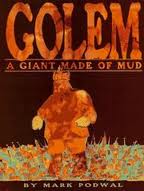
Mark Podwal is the author and illustrator of numerous books. Most of these works – Podwal’s own as well as those he has illustrated for others – typically focus on Jewish legend, history and tradition. Podwal illustrated Elie Wiesel’s retelling of the Golem legend, as well as his own children’s book “Golem: A Giant Made of Mud.†He is currently designing new embroidered textiles for Prague’s Altneuschul.
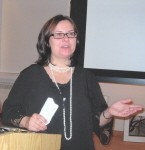 Sylva Pavlasová studied Egyptology and Prehistoric and Early Historic Archaeology at Charles University in Prague. As a curator of the Egyptology Department of the Náprstek Ethnic History Museum in Prague, she produced several exhibitions on Ancient Egypt, including a special exhibition for the blind which was also shown in Slovakia, Egypt, Australia and the United States. She served as cultural attaché in Egypt (1999- 2003), deputy chief of mission and chargé d´affaires at the Czech Embassy in Lebanon (2003-2006), a specialist at Middle East Department of the Ministry of Foreign Affaires in Prague (2006-2009).